 Cellular Cosmology
Light, Aether & Refraction
The nature of light is the key to understanding the cellular cosmos. If light travels in straight lines through empty space, the convex Earth model holds. But if light curves through a medium, everything changes.
Wilhelm Martin's Electromagnetic Light Theory
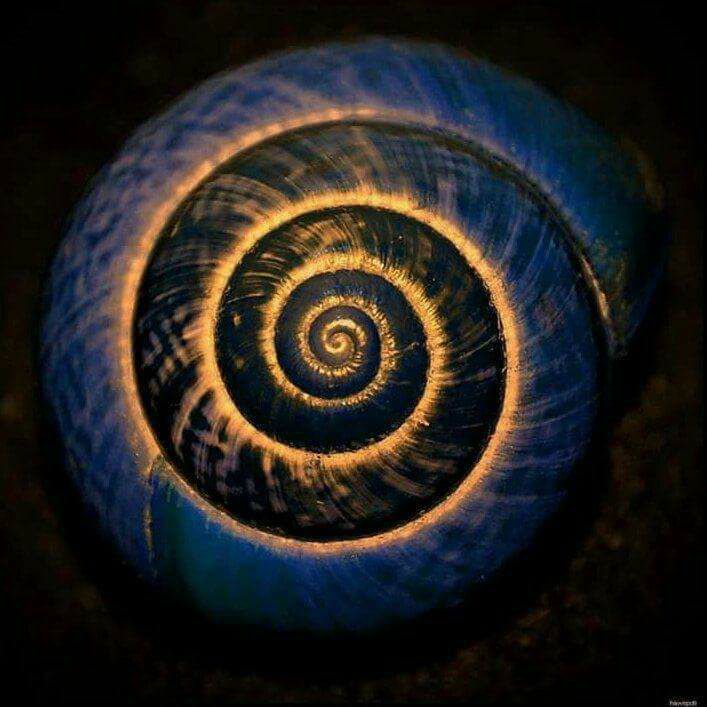
Wilhelm Martin proposed that light is not a particle traveling through a void, but an electromagnetic disturbance propagating through a medium — the aether. Each photon has an internal structure: a rotating electromagnetic dipole that interacts with the surrounding aether field.
The Aether — From Faraday to Tesla
The concept of a light-bearing aether was not abandoned because it was disproven, but because Einstein's special relativity made it unnecessary within its framework. However:
- Faraday conceived electromagnetic fields as states of a medium
- Maxwell derived his equations assuming an aether
- Tesla insisted until his death that the aether was real and essential
- Lorentz showed that aether theory and special relativity yield identical predictions
The aether was not refuted — it was defined away.
Snell's Law and the Aether Gradient
In the cellular cosmos, aether density increases radially toward the center. According to Snell's law, light passing through a medium with varying refractive index bends toward the denser region. This means:
- Light curves inward as it propagates from the shell toward the center
- An observer on the inner surface perceives distant objects as below the horizon — creating the illusion of a convex surface
- The apparent "Earth curvature" is an optical effect, not a physical one
Continue to Chapter 7: Gravitation →
The electromagnetic universe
Today's cosmogony (theory about the origin of the Earth and planets) could soon be replaced by the "Electric Universe." As below, so above. The same forces (electrical laws) act on matter regardless of scale. This is recognizable in the striking similarity between surfaces that were once treated electrically (microcosm) and others that supposedly emerged mechanically (planetary surfaces, Grand Canyon). Why doesn't our Earth's surface look exactly like the "pockmarked" Luna? If "erosion" by atmospheric winds is supposed to be the explanation for completely erasing such mega-crater rims, there should also be no hills and mountains on the Earth's surface! Moreover, it is doubtful that wind erosion is strong enough.
Formation of the Grand Canyon
The mass of rock that supposedly "eroded" in the Grand Canyon would amount to hundreds of cubic miles. Where did this mass go? It cannot have dissolved into thin air. Even if it had been washed into a - non-existent - ocean, there would have to be a huge river delta full of sediments there. With an electrical discharge, however, it would have been pulverized and vaporized in fractions of seconds, giving another argument to the Electric Universe theory. Plasma Cosmology
Wal Thornhill
Cosmology is defined as Science of Origin, structure of Universe. It's the Queen of the Sciences.
Impossible lunar craters
The often present so-called "central peak" of a crater cannot be explained at all by conventional impact simulation. Here is the example of the lunar crater Tycho.
Central peak of lunar crater Tycho
For the "ray system" of a crater, there is still no plausible explanation today.
"Ray system" of the Tycho lunar crater
"The appearance of the rays is explained by a composition of pulverized material that was ejected during the formation of the central crater by a large impact; or also with glass-like particles, into which the rock vaporized by the great energy of the impact had solidified again and which are responsible for the strong reflectivity."
That says everything and nothing. The above line through the lunar landscape consists of nothing but holes lined up next to each other. With the best will in the world, this can no longer be explained by impact theory, but rather looks like a welding seam. The flat lines in the lower right of the image also cannot be explained by craters, let alone by flowing water. Under laboratory conditions, it has been possible to create identical lunar craters - through electrical discharge!
Comments
Loading comments...