 Cellular Cosmology
Worldview · Self-Image · Image of God
Cellular Cosmology is not just an alternative astronomical model. It is a fundamental reorientation of humanity's relationship to the cosmos, to the self, and to the divine.
The Equation
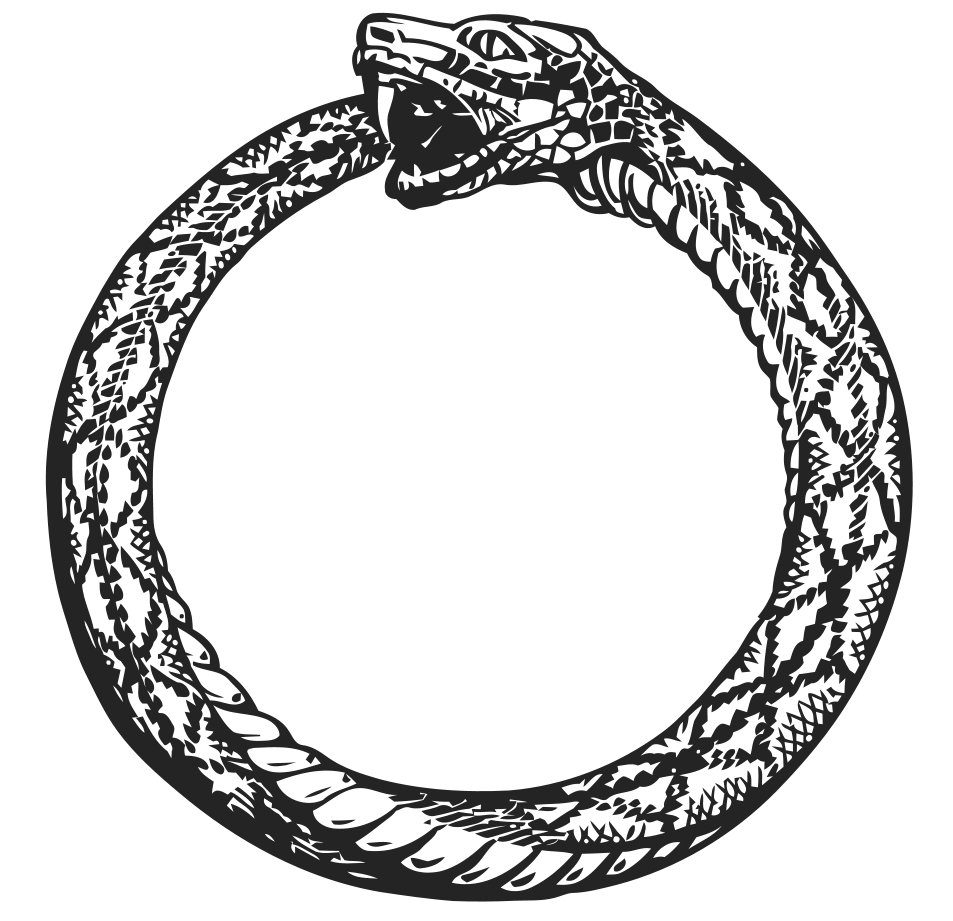
Worldview = Self-Image = Image of God
How we understand the structure of the cosmos directly shapes our self-understanding:
- In a random, infinite universe, humanity is an accident — a cosmic afterthought on an insignificant rock.
- In a concentric, purposeful cosmos, humanity occupies a meaningful position — living on the inner surface of a divinely structured cell, oriented toward a luminous center.
The Three Humiliations (Freud)
Sigmund Freud identified three great "humiliations" of human self-understanding:
- Copernicus: Earth is not the center of the universe
- Darwin: Humanity is not separate from animals
- Freud himself: Consciousness is not master of the psyche
Cellular Cosmology challenges the first and most fundamental of these humiliations.
The Psycho-Cosmological Crisis (Kirchhoff)
Philosopher Jochen Kirchhoff argues that the Copernican worldview created a deep, largely unconscious crisis in human civilization. By removing humanity from a meaningful cosmic position, it severed the connection between macrocosmos and microcosmos, between physical reality and spiritual meaning, between science and religion.
Unity of Science and Religion
Thomas Aquinas argued that science and religion are inseparable — two paths to the same truth. The modern separation of "facts" and "values" is itself a product of Copernican displacement.
In the cellular cosmos, the structure of reality is meaningful.
Continue to Chapter 9: Philosophy of Science →
The Easter Mystery
The Easter Mystery: A Concentric Interpretation
The Quran and the Crucifixion
Surah 4:157 states: "They did not kill him nor crucify him — but it appeared so to them." The orthodox interpretation reads this as a historical denial of the crucifixion, yet this reading does not exhaust the linguistic scope of the Arabic text.
The crucial shubbiha lahum ("it appeared so to them") is grammatically ambiguous. It can mean: "Their understanding of the process was flawed." The executioners believed they were destroying Jesus, but killed only the body — not his essence. The Quran does not deny the historical crucifixion, but rather the executioners' interpretive authority over the event. This is a metaphysical, not historical, statement.
Ibn Arabi interpreted this similarly: Jesus died in a way that the dying ones did not understand. The mystery lay not in physical death, but in what happened through it.
Psalm 22: The Sung Prelude
Jesus' recitation of Psalm 22 on the cross — "My God, my God, why have you forsaken me?" — is not a cry of despair, but a conscious liturgical act. The psalm begins with extreme abandonment by God and ends with cosmic triumph:
- "They divide my garments among them" — fulfilled prophecy
- "They have pierced my hands and feet" — fulfilled prophecy
- "All the ends of the earth shall remember" — the promise
Whoever sings the first verse in Jewish understanding sings the entire psalm. Jesus does not merely quote the lament, but sings the prophecy of its resolution.
Blood and Water: The Cosmic Sacrifice
The lance thrust of Longinus (John 19:34) brings forth blood and water. In the Jewish atonement ritual, precisely these substances are poured over the kapporet — the mercy seat of the Ark of the Covenant — the only sacrifice directly before God's presence in the Holy of Holies.
Jesus dies as both High Priest and sacrificial lamb. The blood and water from the side wound are the offerings over the true mercy seat. The Holy Grail symbolizes the vessel of this greatest sacrifice in history.
The Alchemical Passion
The tools of the Passion correspond to alchemical processes:
- Flagellation — Calcination: The raw material is purified through beating, external slag separated
- Crown of Thorns — Putrefaction: The mind as seat of the ego is pierced, the analytical self crowned with its dissolution
- Nails — Fixation: The body is fixed, the volatile bound, so that the pure can ascend
The cross is the vas hermeticum, the hermetic vessel of transmutation.
The Three Images of Breakthrough
Jesus chose the deepest image himself (John 12:24): "Unless a grain of wheat falls into the earth and dies, it remains alone."
The seed disappears completely in the dark earth, invisible without external signs. Faith must do without confirmation. Only when inner maturity is reached does the shell break from within.
The egg does not break through external intervention, but because the being within has grown too large. The empty tomb is a burst egg. The stone is rolled away so that others can look inside.
The butterfly shows the most radical process: The caterpillar dissolves completely in the cocoon, its cells dedifferentiate into formless soup, before the new form emerges. Complete dissolution before resurrection.
Judas: The Necessary Shadow
Without betrayal no condemnation, without condemnation no crucifixion, without crucifixion no resurrection. Jesus knew it beforehand (John 13:27): "What you are going to do, do quickly." He could have prevented it, but did not. Judas was an integrated part of the divine plan.
The remorse afterward — returning the silver pieces, suicide — shows that Judas fully felt the weight of his deed. He was not a cold traitor, but overwhelmed by something greater than himself.
Arthur Young and the Fourth Stage
Young's Theory of Process describes seven stages:
1. Light — pure potential
2. Particles — first binding
3. Atoms — increasing complexity
4. Molecules — maximum unfreedom, the turning point
5. Plants — first autonomy
6. Animals — mobility, free will
7. Humans — return to freedom in consciousness
The fourth stage is both nadir and turning point — greatest determinism, where it is decided whether the spirit undertakes the return journey. Christ's incarnation is this descent into the fourth stage, the crucifixion its nadir, the resurrection the proof of the overcome reversal.
Metanoia — not psychological repentance, but cosmic reversal of direction. The cross is the geometric locus of this reversal.
Cross the I: Crucify the Ego
The cross (†) emerges when a horizontal line pierces the vertical I. The self that posits itself as absolute is crossed by an Other, relativized, sublated.
Renunciation is the only way out of worldly attachment. Whoever clings to life loses it. Whoever loses it gains eternal life.
The Same Center
The Easter Mystery is a cosmic ritual, performed in history:
- The spirit descends into extreme matter — Incarnation
- It reaches the nadir of unfreedom — Crucifixion, death
- It performs the cosmic metanoia — Resurrection
- And proves: Death does not have the last word
Quran, Psalm, alchemy, Young, the grain — all witness to the same mystery on different levels: Lose your life to gain it. Whoever holds fast to the ego loses themselves. Whoever lets go of the ego finds the self waiting behind it.
This is not a Christian exclusive truth, but the innermost grammar of the cosmos — experienced by everyone who has truly dissolved their own cocoon.
The Toroidal Yin-Yang Symbol
"Signs and symbols govern the world, not words nor laws." - Confucius
Symbols have great significance because, as we know, a picture is worth a thousand words by expressing a principle. The use of certain symbols and gestures also corresponds to the zeitgeist and shapes it subconsciously (think of peace symbols and peace gestures).
On the left, the toroidal-centered-asymmetric Taijitu representation of sexual Yin-Yang complementarity. On the right, the reduced, symmetrically-relativistic polarity symbol from the Ming Dynasty.
The original Yin-Yang was called Taiji. The character 太 (tài) means "very," "highest," "extreme," "the greatest," the maximum, thus the circumference (the earth). The character 極/极 (jí) stands for the summit of a mountain, the ridge beam of a gabled roof, from which derives the meaning of the main point, the pole, the center, the core, the axis (around which heaven rotates).
Taijitu by Lai Shi - the original Yin-Yang symbol
Sexuality and Polarity
The newer Yin-Yang symbol from the Ming era (right) is internationally known and even a fixed component of the international UTF character code with the number U+262F(☯). It comes to many minds spontaneously when asked for a symbol for the polarity and interrelationship of masculine (yang) and feminine (yin). Almost no one knows, however, that the most widespread form today is not that old and only replaced the original so-called "Taijitu" symbol (left) during the Ming Dynasty (1368-1644), which is composed of two concentric circles.
The two symbols are similar regarding the intertwined black-and-white waves that represent polar opposition as well as rhythmic-circulating change (of day and night). However, the sexual complementarity is missing! It can still be found in pure form in one of the oldest and highest creation symbols of Hinduism, the Shiva-Lingam. Viewed from above, the Lingam (phallus) is enclosed by the Yoni (vulva) and corresponds to the toroidal Taiji symbol.
Sexual complementarity in the Shiva-Lingam, the central creation symbol of Hinduism.
Shiva-Shakti (Yang-Yin) in cosmic union
Loss of Center
The sexual complementarity of masculinity (Lingam, penis, axis, center point) and femininity (Yoni, vagina, wheel, circle) is missing in a non-complementary, non-centered, largely symmetrical symbol like the Ming-Yin-Yang. Because the upper drop is bright (masculine-radiant), the lower one doesn't automatically have to be dark (feminine-receptive). Both phases don't differ on the fundamental level, the positions are interchangeable. And precisely this relativity of "hierarchy-free equality" leads to the dissolution of natural-bio-logical opposites. It thus literally creates diabolical confusion (dia-ballein, Greek: to throw into disorder), not least in the self-understanding of man and woman, or their mutual relationship.
Taiji and Torus
The centered symbol contains both rotation and - due to the center - contraction and expansion. It can also be called a toroidal Yin-Yang when viewing the torus from above. The torus shows the spiral pole funnels that meet at the center of the torus sphere.
Torus with complete complementarity: three-dimensional sphere around dimensionless center
Toroidal-fractal Yin-Yang, derived from the Taijitu
Equalization Creates Chaos and Disharmony
The Chinese Ming Dynasty, in which the true Taiji was replaced by the false one, probably also suffered from decadence and was ruled by black magic, like every empire in its destructive end phase, e.g., Atlantis, the Aztec empire, Babylon, Rome, or its present successor, the Anglo-American empire with its negative identity as "world policeman" and its necrophilic "American Way of Life."
That the feminist equalization of man and woman is a wrong path is already explained by the sexually complementary, asymmetrical principle of Shiva-Shakti (related to the structure-giving center - the void - and the periphery - fullness). However, complementarity doesn't mean that women shouldn't also have equal rights (as were legally secured for the first time in early Islam, which was absolutely revolutionary for its time). Today, such a typically feminine right would be, for example, the free choice between professional career and recognized, state-protected and promoted motherhood. Only this can prevent the million-fold abortion of unborn life (which, incidentally, goes back to Karl Marx) and achieve true peace. The loss of center means confusion and unrest.
It's quite remarkable that precisely the shamans of the "uncivilized peoples" grasped cosmic truth so accurately, above all Black Elk, the shaman of the Ogallala Sioux. The North American "great mystery" (Wakan-Tanka) at the center of the world corresponds exactly with Far Eastern Taiji thought. Both cultures are related in this respect.
The Taiji Symbol as Image of the Cosmos
We supposedly live in an acentric universe. Irrationality has spread. But precisely this notion corresponds to the loss of center and is false. The toroidal Taiji symbol also describes the toroidal structure of the Cellular Cosmology: It contains a day and night half, a center (firmament), the periphery (surrounding earth shell), and the aether vortex, which also causes the firmament's rotation. The day side is determined by the yellow sun cardioid, while the night side more resembles a flat moon crescent. The cardioid is created by light rays curved by an aether gradient, emanating from the small yellow sun (at three o'clock, right of the firmament), expanding to the limiting earth shell (at six or twelve o'clock), on whose inner side we actually find ourselves, and curving back toward the center over the night side of the earth shell (at nine o'clock) without hitting it.
The outer earth shell of the cellular cosmos is static, while the firmament rotates in the center.
Here's a well-made animation of the Toroidal Universe (though with subtitles not always correct from a Cellular Cosmology perspective):
The Taiji Symbol and the "Sign of Truth"
A sign of the awakening zeitgeist and a synchronicity on the side: Since the end of 2019, the Taiji symbol has also spread in Germany as a sun sign, or as the "Sign of Truth," usually accompanied by the slogan "recognize - awaken - change." The sign finds its secular support as a symbol for peaceful protest and for exposing government deception at all levels. Brand owner, author, and YouTube influencer Heiko Schrang is the frontman of the sign, which with its slogan has even adorned a bridge since August 2020.
It remains to be hoped that this article points the bearers of the "Sign of Truth" to the overarching cosmic symbolism: sexual complementarity, the true Yin-Yang symbol, the Shiva-Shakti, the highest cosmic principle, but also the threefold cellular cosmos.
Further synchronicity: A corresponding simple crop circle also appeared in June 2020 in Poland, Orchow, though this one is intersected by a second, equally large circle. All coincidence?
Dualism and Nondualism
Knowledge is always gained through comparison, through forming analogies (cf. the article "Truth and its concentric recognition"). This applies equally in physics as in philosophy. Geometric-topological paradoxes can serve to illustrate ontological (relating to being) questions. A Möbius strip is such a paradox. It is created by cutting open and twistedly rejoining a closed band. It has - viewed along its entire length - only one side: If you trace it with your finger, you pass by both the front and the back. But locally, at one point it has two sides that can be clearly distinguished from each other. If you conceive the Möbius strip as a capacitor (i.e., made of two electrically conductive layers with an insulation layer / dielectric in between) and connect both overlapping layers at one point with a voltage source, you can create a local charge difference between top and bottom at high frequency, which would no longer exist at low frequency, since then the charges migrate fast enough over the entire band length and equalize. The Möbius strip is supposed to possess previously unexplored physical properties due to this paradox (keywords: free energy, resonance frequency, magnetic monopole). A torus also has an inside (the funnel along its central axis) and an outside (the spherical surface) that merge and vice versa. If you draw a fence around a pole opening, a separation is created between the pole opening and the rest of the spherical surface. But via the central funnel, the sides are again connected.
Torus with connecting central funnels
Just as the layers in the Möbius strip are simultaneously separated and yet united, so one can understand the paradox of unity in diversity, the simultaneous reality of dualism and nondualism. "Unity in separation" - Unity in Diversity is the paradoxical basic structure of the universe. It appears paradoxical to our mind because we know different ways of viewing: the concrete, immediate (as symbolized astrologically by the sign of Gemini, or the third house) and the abstract, superordinate (Sagittarius, 9th house). Since all ways of perception, or states of consciousness are equally part of the human essence and human experience, from a holistic perspective all are equally entitled and equally valid and would not even be hierarchically distinguishable. The paradoxical nature of this simultaneous both-and is not based on a fundamental inconceivability or illogic, but probably on a mutual perceptual exclusivity (cf. the analogous contravalent Boolean XOR function): The perception of a fact (such as connectedness, determinacy) must always fade out the other side (namely the equally existing separateness, the possibility) for its duration. Free will corresponds to dualism, determinacy to nondualism. A self-conscious being like humans probably cannot simultaneously perceive itself as a (separate) active will-exerciser and as a (connected) passive observer.
The metaphorical analogy to this XOR selectivity is the so-called ambiguous figure, e.g., in the form of two faces looking at each other in profile, which simultaneously form the silhouette of a vase.
When you think of the vase, or focus on it, the faces disappear at that moment and vice versa. The vase can only be described as "not-face," the faces only as "not-vase." The ambiguous figure undeniably exists as a whole, but there is no term for this neither-nor. Wholeness (or the divine essence) is therefore also called "Neti-Neti" ("not this, not that") in Vedic philosophy.
The paradox of both-and remains effective, or real, true and conceivable despite the XOR exclusivity, since it even exists in a three-dimensional object like the Möbius strip. It is by no means dysfunctional, because as is well known, the whole is more than the sum of its parts!
From the dualistic view of separateness, freedom, independence and responsibility emerge. Love is also an expression of unity in diversity, since on the one hand it means connectedness, but on the other hand cannot be forced or controlled and consequently can only take place between two independent individuals. The so-called "self-love" that is called for in esoteric, or should one say: in "egoteric" circles, is in this sense a contradiction in terms. The Christian-ecumenical commandment of love of neighbor ("Love your neighbor") refers primarily to the neighbor. The addition "... as yourself" correctly translated means "...as if he were you yourself" (i.e., not distinguished from oneself), thereby again emphasizing only unity in diversity. As the image of the Creator, humans are one with God, but nevertheless separated from him (cf. "I and the Father are one" - but not: "I am the Father"). Unity with God is established via the divine spark in humans themselves, also called "Atman." Humans as a torus have an outside (the sphere, which stands for body, soul and spirit), which is simultaneously nourished from the inside (the singular, infinitesimal center point in the torus center) and stands in interrelation with it. This singularity stands for Being-Consciousness-Bliss (Sat-Chit-Ananda) and is the gateway to transcendence (detachment from creation), which humans share with the simultaneously transcendent and immanent Creator (cf. achyntia bheda abheda tattvam). In relation to the seven chakras (the energy vortices along the spine), the lower six chakras would be connected with creation (and via the double-funnel nature of the chakras with the twelve zodiac signs), while the seventh chakra (the crown chakra) looks upward, toward the transcendent heaven.
Truth and Concentric Knowledge
Truth and Its Concentric Recognition
Summary
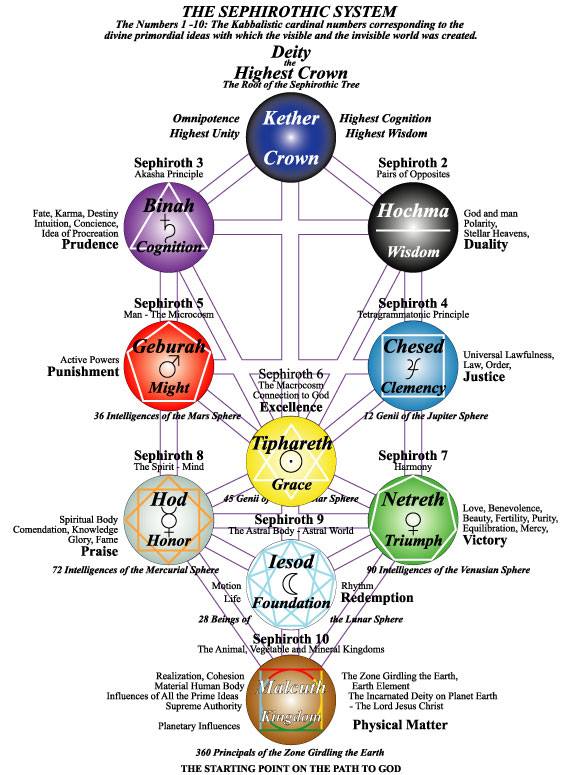
The ultimate purpose of all science and religion is the systematic recognition of truth. However, objective understanding is subject to fundamental limitations due to the purely subjective essential core of reality (Gödel's incompleteness theorem). Since it can only recognize through comparison, singularity - the propertyless, incomprehensible being - eludes it. Reality is concentrically structured: The outer, visible world is a symbol of the inner, invisible one. And since everything relates analogously to each other (as within, so without; as above, so below), the concrete, material cosmos must also be concentrically structured - whereby Cellular Cosmology would be abstractly proven. The kabbalistic Tree of Life with its ten spheres (Sephiroth) provides the "universal structure" that is applicable both on the concrete as well as the abstract level of consideration.
What is Truth?
There is increasing confusion over the concept of truth in a time when relativism and existentialism are spreading. An etymological consideration is revealing: In Sanskrit, "satya" is the term for truth, composed of "sat" (being) and "tya" (the thing), thus the "existing thing" that is propertyless and therefore unchangeably "is."
Truth is the underlying, causal and unchangeable.
Truth is ultimately subjective, i.e., not objectifiable.
With his epochal incompleteness theorem, Kurt Gödel proved that there is no sufficiently powerful axiomatic system that can prove all statements within itself. A system is thus either paradoxical and complete, or consistent and incomplete.
What is Knowledge?
Knowledge is gained through comparison, through analogy: Something new and unknown can only be recognized by comparing its properties with something old and known. The unity of all things is the dogma on which knowledge and analogical thinking are based.
Knowledge is attained through comparison of the unknown with the known.
The "Anonymus d'outre tombe" formulates this fundamentally:
The dogma of the unity of the essence of everything that exists precedes every act of knowledge, and every act of knowledge presupposes the dogma of the unity of the world. The ideal or the ultimate goal of all philosophy and all science is truth. But "truth" has no other meaning than the reduction of the multiplicity of phenomena to essential unity.
Analogy is the fundamental method of knowledge that follows from the dogma of universal unity. In logic, it plays three roles: the procedure of classification, the basis of hypotheses, and the enhancement of known analogies to avoid pure induction.
The Four Levels of Knowledge
Scientific exploration of truth proceeds from the changeable to the unchangeable. Four levels can be distinguished: The phenomena, the natural laws, the cosmic principles, and the pure, heavenly-divine being.
In the recognition of truth, natural sciences, numerology, and spirituality fundamentally apply the same analogical method. While the "exact natural sciences" deal with the lower two levels, numerology directly engages at the level of principles. Numbers are far more than quantifiers; they are primarily qualifiers.
Examples of the Levels of Knowledge
Principles differ from natural laws in their degree of abstraction. Example: Phenomenologically, it is observed that every action is followed by a reaction. The natural law behind this is the conservation of momentum. The metaphysical principle behind it could be the Yin-Yang polarity. Above the principle of polarity stands the unity of all being.
Analogy Between the Path of Knowledge and Cosmic Order
The Federal Constitutional Court defined: "Science includes everything that, according to content and form, can be regarded as a serious attempt to determine truth."
Because creation is paradoxically structured (unity in diversity), both ends - the phenomena and being - are connected and must equally be "experienced." The symbol for this is the "divine ladder" or Jacob's ladder.
The concentric kabbalistic tree forms the primordial structure of the universe and of the path of knowledge and development of the soul. The synthesis of exotericism (natural science) and esotericism (spirituality) requires a hermetic cosmology in which the laws of Hermes Trismegistus apply ("As above, so below; as within, so without; as in the great, so in the small").
Below the upper, above the lower is he [the sun] who knows his father. - Rig Veda
The expansion of consciousness across the spectrum of developmental stages occurs in leaps. In the Rig Veda, it is compared to ascending and descending on a divine ladder: "These steps, which are called descending, are also referred to as ascending."
The world formula will never exist, for paradox is the foundation of creation: unity in diversity. Another word for this principle is "love." Love is the fundamental principle of creation - unity in diversity that grants freedom and yet endures all.
The World as Peep Show (Spengler)
The World as Peep Show - the Faustian Life-Feeling of Emptiness
The fundamental problem of the Copernican worldview is not its physical contradictions, but the context - the worldview, the image of one's own soul.
Oswald Spengler performs in his monumental work "The Decline of the West" a unique analysis of our "Faustian life-feeling," which sits so deeply in our flesh and blood that we are not conscious of it: the world as "peep show."
Apollonian versus Faustian Art Perception
The Ancient Soul
"No ancient artwork seeks a relationship to the observer. An Attic statue is completely Euclidean body, timeless and relationless, thoroughly self-contained. It remains silent. It has no gaze. It knows nothing of the spectator. It stands independently beside the ancient human, body next to body. He feels its mere proximity, not its approaching power. Thus the Apollonian life-feeling expresses itself."
The Magical Turn
"The awakening magical art reversed the meaning of these forms. The eye of statues of Constantinian style directs itself large and fixed on the observer. Antiquity had formed the eye blind; now the pupil is bored, the eye turns into space. A mysteriously penetrating distant effect passes from the world in the artwork into the sphere of the spectator."
The Faustian Peep Show Image
"Western painting from Leonardo onwards conceives the one infinite space, to which the work and the spectator, both mere focal points of spatial dynamics, belong. The painting does not direct itself to the spectator; it takes him into its sphere. The section limited by the picture frame - the peep show image - represents world-space itself. We 'immerse' ourselves in a picture, that means, we are drawn into the picture by the force of spatial treatment."
The Astronomical Worldview as Soul Expression
Ancient Earth-Boundedness
"The Apollonian human had never wanted to notice the wide world-space. His philosophical systems all remain silent about it. They take the earth sphere as the simply given whole world, and nothing seems stranger than the attempts to assign the celestial vault to the earth so that its symbolic precedence is not affected."
Faustian Space Conquest
"The shocking vehemence with which Copernicus's discovery penetrated the soul of the West, and the deep reverence with which Kepler discovered the laws of planetary orbits - here the old Nordic life-feeling, the Viking longing for the boundless came into its own. This gives the genuinely Faustian invention of the telescope a deep meaning. The truly religious feeling of today's human when looking into stellar space, a feeling of power, would have appeared to Sophocles as the sacrilege of all sacrileges."
The Construction of the Modern Worldview
Interpretation Instead of Experience
"The negation of the 'celestial vault' is a decision, no sensual experience. All modern conceptions about the nature of star-filled space are not based on certain knowledge. In the telescope we see only small bright discs of various sizes. These must first be reinterpreted through many and very daring hypotheses to deliver a closed worldview. The style of this image corresponds to the style of our soul. What we 'see' are merely light signals; what we 'understand' are symbols of ourselves."
Space Mastery as World-Feeling
"The pathos of Copernican world-consciousness rests on the certainty that now the corporeal-static, the symbolic predominance of the plastic earth body is taken from the cosmos. Now it is space that dominates the universe; 'world' means space, and the heavenly bodies are hardly more than mathematical points, tiny spheres in the immeasurable."
Physics as Expression of Soul Type
Tension as Faustian Principle
"The pathos of distance is precisely foreign to antiquity, in which everything human requires proximity, support and community. This pathos appears again in the image of Western physics: as tension. The principle of tension - developed in potential theory - has become fundamental for modern physics. It contains a conclusion from the concept of energy, of the will to power in nature, and is therefore as necessary for us as impossible for ancient humans."
Religious Intolerance as Spatial Dynamics
"For the Faustian soul, dogma was essential, not the visible cult. It is the opposition of space and body, of overcoming and acknowledging appearance. A Faustian religion could by its nature permit no freedom of conscience - this contradicts its space-penetrating dynamics. The force field of a conviction orders all spirits located within it to its tension."
Spengler's analysis shows how our modern worldview represents not objective reality, but projection of our specifically "Faustian" soul constitution - with all consequences for our life-feeling of emptiness in infinite space.
The God Question
The belief in science as a substitute religion paradoxically increases more and more especially in times of crisis - scientists themselves discovered. Excerpt from a discussion in a scientific forum ("Big Bang, Universe and Life") with a "science believer".
Today's Topic: "The God Question"
udogigahertz wrote:
What attitude should we have in your opinion? Again for clarification, what "science" actually is, what it achieves and what it doesn't: Science tries to answer questions posed to nature using generally accepted methods,
Dear Udo, this popular opinion is shared by many convenient atheists, but does not correspond to the Federal Constitutional Court's definition of "scientific research", namely as "everything that can be regarded as a serious, systematic attempt to determine the truth by content and form." And the question of "why" certainly belongs to finding the truth!
udogigahertz wrote:
Even the question of how or why the first biologically living cell developed on our planet sometime in the distant past will ultimately never be clarified by science, science CANNOT provide statements about this.
But you can't separate this from the "theory of evolution"!
udogigahertz wrote: Science can only make statements about how the developmental path of life proceeded (evolution) whereby unfortunately here too there are enormous gaps in knowledge, because one can only take a "look into the past" from fossil remains. Unfortunately there are far too many gaps, not every organism, not every species has left us petrified remains. Nevertheless, evolution is considered scientifically established. A creator God is NOT required for this!
Nonsense! No matter how often you tip a truckload of bricks down a slope, a brick house will never remain standing at the bottom! Furthermore, every "randomly" new trait of a race would immediately be lost again in the gene pool if it weren't isolated through artificial breeding. Think logically for a bit!
udogigahertz wrote:
However, I refer to the "problem" unsolvable by science of the origin of the first cell or why it simply arose here, it could all be a coincidence, the meeting of fortunate circumstances ........ or not. Science cannot make a statement about this.
Exactly right, my dear! When you have no idea - just shut up! That's not meant personally!
udogigahertz wrote:
One can now answer the unsolvable or the not yet solved questions by leaving these questions open or waiting until science has answers, or ........... one can of course also assume that a "higher entity" had its fingers or tentacles or whatever in the game here.
The second possibility would be the logical conclusion for any reasonably thinking person, don't you think?
udogigahertz wrote:
But with this we enter the world of belief, which differs fundamentally from science in that one knows nothing about it in principle, then one wouldn't have to "believe", then one would know it
See above. When someone comes to the realization that there is a creator through scientific work, namely careful observation and logical conclusion, they don't just believe, but are certain! Most great scientists were believers. I personally think nothing of Stephen Hawking. Neither humanly nor professionally. Even the disabled bonus doesn't work for me with someone who blocked the most prestigious chair (Lucasian Chair of Mathematics, Cambridge) for 30 years (!!) out of pure attention-seeking. I admire instead the German chemist and mathematician Dr. Peter Plichta ("God's Secret Formula"). His books, in which he brings together his personal life, his faith and his truly brilliantly simple scientific insights, are more exciting than any thriller!
udogigahertz wrote: Therefore this rather scientifically oriented forum is not really well suited for discussing such questions of faith, especially because there is not ONE "true" belief, but besides the major world religions there are plenty of sects and additionally probably every person has their very personal belief. In my opinion, matters of faith should remain private matters.
Again: Science has the task of finding out the truth. Truth is what doesn't change. One approaches the truth by studying phenomena, deriving laws from them, distilling principles from the laws, to ultimately arrive at pure "being". Every insight must necessarily use the principle of analogy, namely comparing the unknown with the known. For this, the dogma of the fundamental unity of all things is the prerequisite, otherwise one couldn't compare. And the fundamental unity requires a common origin = Creator!
Any more questions? ;)
"One must be sane to think clearly, but one can think deeply and be quite insane." - Nikola Tesla
Feminine and Masculine
"If scientists would think in categories of masculine and feminine, science would make progress much faster." - Sai Baba, Sanatana Sarati Monthly, around 1993
The validity of this claim is obvious, because the process of knowledge always occurs in the direction of simplification. From peripheral phenomena through laws to principles and ultimately to pure being. Today's scientists, however, no longer strive for truth, but likewise spin in the hamster wheel of making a living, just doing their job, like priests do. They reject analogical thinking in abstract categories, because this also presupposes the dogma of the fundamental unity of all things. However, whoever assumes "chance" and "chaos" as the basic principle of the universe cannot draw analogical conclusions , must grope through phenomena like a blind person and can only discover laws by accident, instead of deducing them from higher principles. The principle of progress is efficiency increase, i.e., achieving more and more with less and less effort. It can also be called condensation , or negentropy. Everything fundamental and effective is simple. Because diversity (the complex, the complicated) always develops from the elementary, from unity. The two basic principles "masculine" and "feminine" can be subdivided into sub-principles, which can be grouped into themes and to which a number can be assigned. Below is a tentative attempt, in whose provisional incompleteness and occasional contradictions/disorder fascinating (numerological) cross-connections are already revealed: Masculine <> Feminine
Father <> Mother
Man <> Woman
Yang <> Yin
Sun <> Moon
Gold <> Silver
1 <> 2
3
Center <> Periphery
Midpoint <> Circle
Core <> Shell
Content <> Packaging
Essential <> Unessential
Truth <> Illusion
inside <> outside
Cell nucleus <> Cell membrane
Lingam <> Yoni
Rod <> Opening
Line <> Circle
Oscillation <> Rotation
Vertical <> Horizontal
1 <> 6
7
Abundance <> Lack
Wealth <> Poverty****
Sodium <> Chlorine
Electron <> Proton
Basic <> Acidic
Sperm <> Vaginal secretion
11 <> 9
A world in a state of transition is symbolized by the numbers of imbalance, namely 9 and 11.
Balance
The principle of balance****is numerically symbolized not by the sum, but meaningfully by the middle, the synthesis of both poles/extremes of abundance and lack. In chemistry, salt is the perfect symbol of peace, as it emerges as the "reaction product" of an acid and a base. However, the bond is not firm/molecular, but loose/ionic. While sodium and chlorine are among the most reactive elements, neon with atomic number 10 is the most inert, calmest element (following the motto: who doesn't want, already has).
Peace (Shanti)
Order
Equilibrium
Table salt (NaCl)
Neon
10
As already mentioned in the blog entry "The Occult Meaning of 9/11" , the number eleven can be represented mainly as the sum of 6 and 5, which in turn are associated with the most important geometric symbols of Freemasonry. Pentagram <> Hexagram
Movement <> Rest
Tension <> Relaxation
White <> Red
Sperm <> Blood
Mars <> Venus
5 <> 6
Creative dynamics
Unity in diversity
Unity <> Diversity
God <> Creation
Heaven <> Earth
Simplicity <> Complexity
Condensation <> Expansion
Centripetal <> Centrifugal
Solidification <> Flow
Structure <> Chaos
Ice <> Water
Capricorn <> Cancer
Saturn <> Moon
1(0) <> 4
Mirroring
I <> You
Aries <> Libra
Krishna <> Radha
Ray <> Reflection
God <> human soul
1 <> 7
The colors of the Viking sail, as well as the Union Jack (American flag) and the Templar cross, but also Santa Claus (Satan's Cause) and Coca-Cola are white and red. White represents masculine sperm, red represents feminine menstrual blood. The cross also symbolizes the penetration of the masculine-vertical principle by the feminine-horizontal principle. For demons there is no higher truth than the eternally lustful dance of Shiva-Shakti. They deny and fight the Creator and the higher meaning of life (transformation through love).
Comments
Loading comments...